Case 06Framework developed
Material Acceptance and Governance
Business questionShould this incoming material be accepted for operational use?
Acceptance responsibilities, documentation checks, certificates, workflow ownership, escalation and RACI for incoming materials.
A process, methodology, guideline or governance framework developed from professional knowledge.
Why it matters
- Technical complianceOnly conforming material reaches operations.
- TraceabilityDocuments and decisions follow the material.
- AccountabilityEach gate has a named owner.
- Material readinessExceptions are closed before the material is needed.
01Business context
Incoming material is received against an order, but receipt is not the same as acceptance. An item can match the delivery note and still carry the wrong part number, miss certificates, show transport damage or raise a quality question nobody owns.
Without a clear acceptance framework those cases sit in the warehouse between functions. Receiving waits for engineering, engineering waits for documents, procurement waits for the supplier, and maintenance assumes the item is ready.
The framework defines what is checked at acceptance, who decides at each gate, and how an exception is held, clarified or escalated instead of being quietly put on the shelf.
02My role
My contribution
I developed a material acceptance and governance framework: acceptance responsibilities, documentation and certificate checks, workflow ownership, escalation and a RACI for incoming materials. It draws on my materials roles and on training in certification of equipment and materials.
Wider process
The warehouse receives and inspects. QA/QC and engineering decide on technical conformity. Procurement (C&P) resolves supplier and order issues. Maintenance confirms the operational need. The framework connects these responsibilities.
03Signals and inputs
The information that drives the decision.
- S01IdentificationMaterial number, description, part number and marking.
- S02Order referencePO or call-off and the order line.
- S03DocumentationDelivery and technical documents.
- S04CertificatesRequired certificates and their content.
- S05Physical conditionDamage, packaging and preservation state.
- S06Technical requirementThe specification the item must meet.
- S07OwnershipWho decides at each gate.
04Acceptance gates
Should this incoming material be accepted for operational use?
- Gate: can trigger escalation
- Decision
Open a step to see why it matters and when it is escalated.
01GateWarehouse
Incoming material
Delivery against a PO or call-off.
Why it matters and when to escalate
- Why it matters
- Acceptance starts from what was ordered.
- Escalate when
- Material arrives without an order reference.
02GateWarehouse
Identification
Part number, description and marking match the order.
Why it matters and when to escalate
- Why it matters
- A mismatch here is the cheapest one to catch.
- Escalate when
- Identification does not match the order.
03GateWarehouse / C&P
Documentation
Delivery and technical documents complete.
Why it matters and when to escalate
- Why it matters
- Documentation is part of the material.
- Escalate when
- Documents are missing.
04GateQA/QC
Certificates
Required certificates present and consistent.
Why it matters and when to escalate
- Why it matters
- Material without valid certificates may not be usable.
- Escalate when
- Certificates are missing or do not match.
05GateWarehouse / QA/QC
Condition
Damage, packaging and preservation state.
Why it matters and when to escalate
- Why it matters
- Transport and storage damage shows here.
- Escalate when
- Damage or deterioration is found.
06GateEngineering
Technical requirement
Conformity with the specification.
Why it matters and when to escalate
- Why it matters
- The item must work in the equipment, not only match the paperwork.
- Escalate when
- Conformity is in doubt.
07GateRACI
Ownership / RACI
Responsible and accountable owner for the decision.
Why it matters and when to escalate
- Why it matters
- Exceptions without an owner stay open.
- Escalate when
- Nobody accepts ownership of the decision.
08Decision
Acceptance decision
Accept, hold, clarify or reject.
Why it matters
- Why it matters
- The status of the material is clear to everyone.
05Professional judgement
Receipt is a logistics event. Acceptance is a technical and governance decision.
The difficult cases are rarely clear rejections. They are items that are probably right: a part number differs by a suffix, a certificate is a copy instead of an original, the packaging is damaged but the item looks fine. The framework does not remove judgement from those cases. It makes sure the right person exercises it and records why.
A hold is a legitimate outcome. Accepting a doubtful item to clear the warehouse only moves the risk to the plant.
06What can go wrong
Receipt treated as acceptance
Nonconforming material is issued to maintenance.
ControlSeparate receipt from acceptance.
Documents chased after use
Certificates are missing when the item is already installed.
ControlClose documentation before release.
Exception without an owner
Items sit in quarantine indefinitely.
ControlAssign an owner through the RACI.
Damage not recorded
Supplier claims become impossible.
ControlRecord condition at receipt.
Doubtful item accepted
Risk moves from the warehouse to the plant.
ControlUse hold and clarify as legitimate outcomes.
07Decision outcomes
- AcceptConforming and documented; released for use.
- Hold / quarantineKept out of use until an open gate is closed.
- ClarifyQuestion sent to the supplier, engineering or QA/QC.
- RejectNonconforming; returned or replaced through procurement.
08Framework objective
- Conforming stockOnly accepted material reaches operations.
- Owned exceptionsEvery open item has a responsible person.
- Documentary readinessCertificates and documents are complete at release.
- Supplier accountabilityDamage and gaps are recorded while a claim is still possible.
09Evidence and basis
Basis of this case
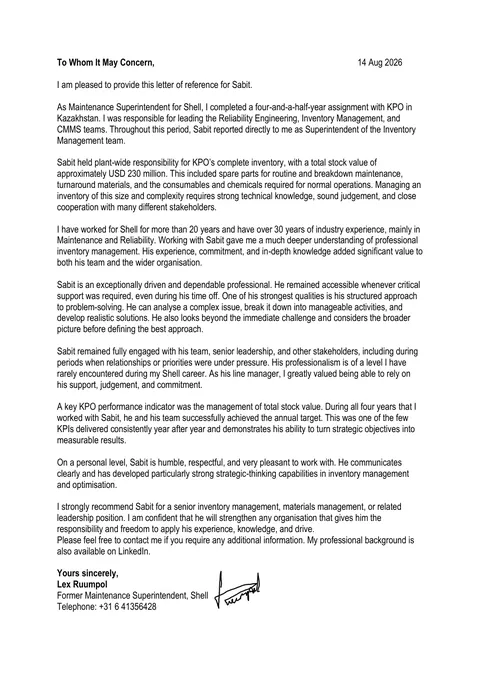
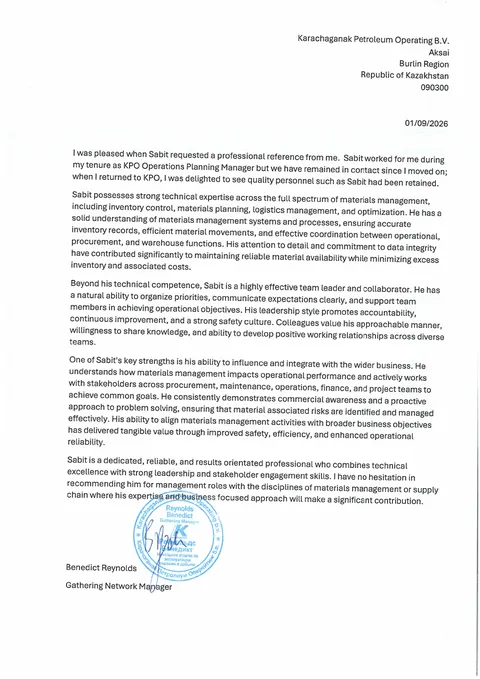
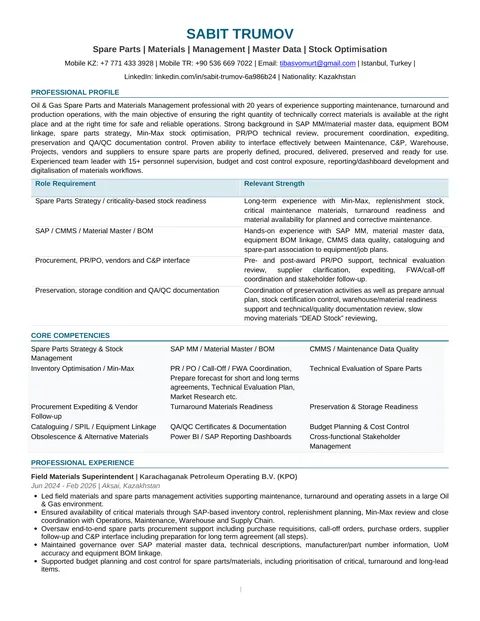
Developed from materials work across the CV roles and from training in Certification of Equipment and Materials. Presented as a framework (governance model and RACI), not as a company procedure. Gate owners are generic functions, not named company departments.
Connected intelligence
Where this case connects to the career, the Knowledge Book and the credentials.