Case 04Operational experience
Preservation Governance and Storage Readiness
Business questionWill this stored material still be fit for use when maintenance needs it?
Preservation plans built around criticality, manufacturer guidance, storage conditions, planned-use date, certification and fit-for-use risk.
Actual professional work, operational responsibility or implemented activity.
Why it matters
- Maintenance readinessStored spares are usable on the day of the job.
- Lifecycle riskDeterioration is found in storage, not at installation.
- Technical complianceDocumentation stays valid along with the material.
- Working capitalStock that has lost its value does not stay hidden as available.
01Business context
Spare parts and project materials can stay in storage for years before they are installed. During that time seals age, surfaces corrode, packaging fails and certificates expire, while the stock record still shows the item as available.
For critical equipment that gap is dangerous: the plant believes the spare exists, plans around it, and discovers on the day of the repair that it cannot be used.
Preservation governance closes the gap. It plans preservation around risk, checks condition and documentation, and corrects or restricts items before they are needed rather than when they are needed.
02My role
My responsibility
Defined preservation requirements as Spare Parts Engineer and governed preservation as Spare Parts Superintendent: annual preservation planning, condition follow-up and the readiness of stored spares, supported by dedicated training in material preservation, storage and corrosion protection.
Wider process
The warehouse stores and handles the material and carries out preservation tasks. QA/QC and engineering answer technical and condition questions. Maintenance owns the equipment and the planned-use date.
03Signals and inputs
The information that drives the decision.
- S01CriticalityConsequence of the spare not being fit for use.
- S02OEM guidanceManufacturer requirements for storage and preservation.
- S03Storage environmentIndoor or outdoor, climate, exposure.
- S04Planned-use dateWhen maintenance expects to install the item.
- S05Shelf lifeTime-limited components and materials.
- S06PackagingIntegrity of the original protection.
- S07Corrosion riskExposed surfaces and protective coatings.
- S08Certification statusValidity of certificates and documentation.
04Decision path
Will this stored material still be fit for use when maintenance needs it?
- Check
- Gate: can trigger escalation
- Decision
Open a step to see why it matters and when it is escalated.
01
Material
Item, storage location and stock record.
Why it matters
- Why it matters
- Preservation starts from what is actually stored.
02
Risk context
Criticality, storage environment and planned-use date.
Why it matters
- Why it matters
- Not every item needs the same level of control.
03Gate
Preservation requirement
OEM guidance, shelf life, packaging and corrosion protection.
Why it matters and when to escalate
- Why it matters
- The requirement defines what to check and how.
- Escalate when
- No guidance exists for a critical item.
04
Inspection
Physical condition and preservation status.
Why it matters
- Why it matters
- The stock record shows quantity, not condition.
05Gate
Condition
Packaging, corrosion, shelf life and documentation.
Why it matters and when to escalate
- Why it matters
- Physical and documentary readiness are both needed.
- Escalate when
- Damage, expiry or missing documents are found.
06Gate
Corrective action / re-certification
Re-preservation, repair, replacement or renewed certification.
Why it matters and when to escalate
- Why it matters
- A defect found in storage can still be fixed in time.
- Escalate when
- Correction is not possible before the planned-use date.
07Decision
Fit for use / restriction
Released as ready, or restricted with a reason.
Why it matters
- Why it matters
- Maintenance plans only on items it can trust.
05Professional judgement
Material availability is not useful if identification, certification or condition cannot be trusted.
Preservation should be risk-based, not calendar-only. A critical spare with a near planned-use date deserves more attention than a common item that will be consumed next month, even if a calendar treats them the same.
The control has to protect both physical condition and documentary readiness. A perfect part without valid documents can be as unusable as a corroded one.
06What can go wrong
Calendar-only preservation
Effort goes to low-risk items while critical spares deteriorate.
ControlPlan by criticality and planned-use date.
Shelf life not tracked
Time-expired parts are found at the job.
ControlIdentify shelf-life items and review them.
Hidden packaging damage
Corrosion starts inside stock that looks intact.
ControlInspect packaging integrity, not only labels.
Certificates expired or missing
Physically sound material cannot be accepted for use.
ControlCheck documentation together with condition.
Overdue actions
Preservation tasks accumulate without owners.
ControlMake overdue actions visible, each with an owner.
07Decision outcomes
- Fit for useCondition and documentation confirmed.
- Re-preservePreservation renewed; the item stays available.
- Re-certifyDocumentation renewed before release.
- RestrictNot released for use until corrected.
- EscalateEngineering decision needed on condition or replacement.
08Operational value
- ReadinessSpares are usable when the job is planned.
- Early detectionDeterioration is found during storage.
- A trusted stock recordAvailable means usable, not only counted.
- Prioritised effortPreservation work follows risk.
09Evidence and basis
Basis of this case
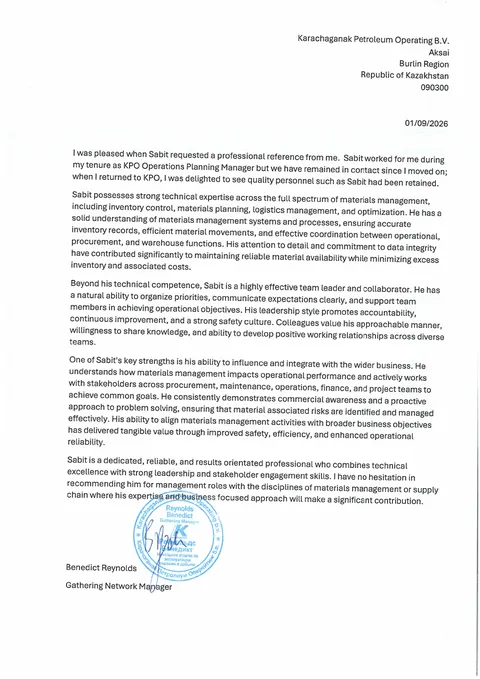
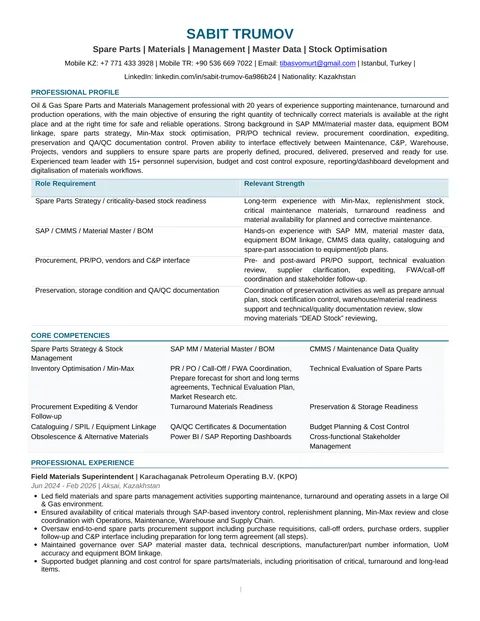
CV: preservation requirements (Spare Parts Engineer, 2008 to 2011) and preservation governance (Spare Parts Superintendent, 2012 to 2024). Dedicated training: Material Preservation, Storage and Corrosion Protection. Inputs and control outputs follow the Knowledge Book article Preservation as an Operational Risk Control. No inspection intervals are stated: they depend on the item and the manufacturer.
Connected intelligence
Where this case connects to the career, the Knowledge Book and the credentials.